In Short:
Shoushimin: How to Become Ordinary is a 22 episode anime made by studio Lapin Track in 2024 & 2025 based on an existing series of novels and manga. It follows Jogoro Kobato and Yuki Osanai, two clever yet quietly quirky high school students who have a knack for solving minor mysteries. In addition to its fascinating main characters, the show features great art, inventive direction, and slow, subtle storytelling that rewards you for paying close attention to details.
This is a show that is slower paced than most anime. Sometimes, an odd glance or even a barely mentioned omission can be key to an entire plot line. Some will really appreciate what the show does, but others may find it too slow for their liking.
Suggested Watch Minimum: 3 episodes. The second episode is possibly the best example of the show’s subtle, slower-paced mini-mysteries, while the third episode is where the first arc really kicks in. Both need to be watched to have a good idea what you are getting into.
Full Review:
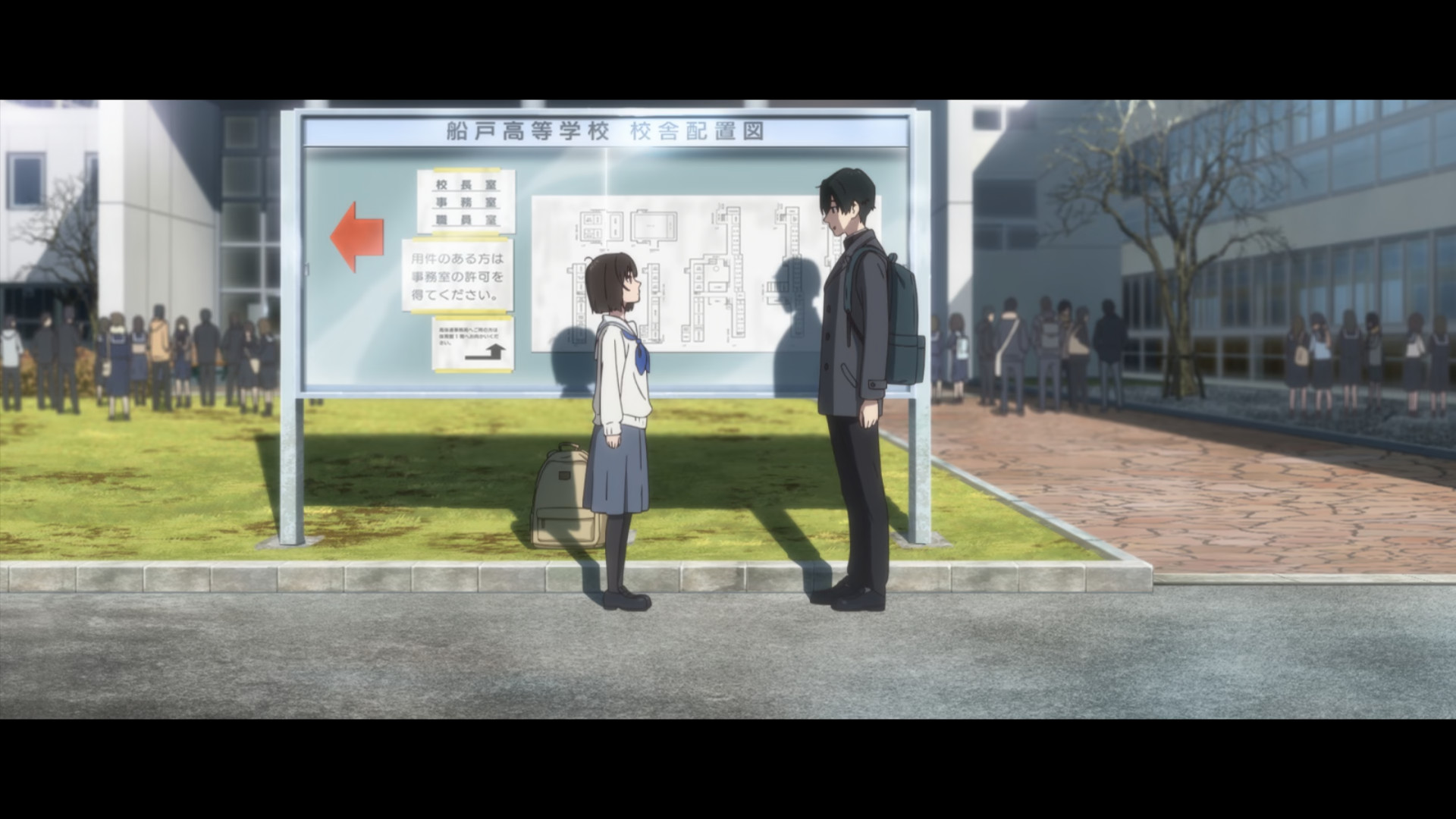 We first meet Jogoro Kobato on a sunny afternoon in the courtyard of the high school he recently applied to. The student number on the entrance exam printout he holds in his hand matches one of the many numbers posted on the display board he and several other potential students are standing in front of. He made it in, and can’t help the smug, satisfied smile plastered on his face as a result.
A minute later, Jogoro receives a text message and briefly searches around until he finds Yuki Osanai. The two have clearly met before, and, with a knowing look, the small, shy girl is able to instantly read Jogoro’s smug expression and softly replies: “Me, too.” They both made it in.
Yuki asks Jogoro if he’d like to go get some sweets to celebrate, but then suddenly tucks in close to him to hide as she spots another friend, a girl this time, leaning against a wall away from the courtyard. This girl is clearly not celebrating, and Jogoro begins to speculate that she must not have been accepted. But then he stops and apologizes to Yuki by saying: “ I’m failing to be an ordinary person, huh?”
This short interaction in the first couple of minutes of the show tells you almost everything you need to know about these two characters, and it begins the set up of the show’s biggest and best mystery. Jogoro is smart and a little smug. Yuki is insightful, shy, and loves to eat sweet thing. And, for some reason, the two of them really do wish to become ordinary. But that implies that they are somehow not ordinary now, something that turns out to be true in ways that are quieter and more subtle than you might expect.
 Over the next few of episodes we learn that these two each have aspects of their pasts they wish to distance themselves from now that they’ve entered high school. For Jogoro, it’s his instinctive habit of wanting to solve any sort of mystery he sees. For Yuki, it’s something a bit more frightening, especially coming from such a small girl. But what these two did in the past and what happened to make them both want to change are things that won’t all be fully teased out until the show’s final episodes. One thing that soon becomes clear, though, is that these two have made some sort of promise to support each other in their mutual goal to become ordinary.
One of my favorite aspects of the show is the way Jogoro and Yuki regard each other. They’re almost always together. They help each other when the other has a bad day. They enjoy subtly teasing each other and challenging each other’s problem solving abilities. But when asked early on if they are in a relationship they just stare blankly at each other, seemingly having never considered such a thing.
There’s also this mutual respect they have for each other’s odd way of thinking that is really sweet. For instance, when they first meet back in middle school, Jogoro declares he is looking to challenge himself and solve a case all on his own. When Yuki asks him how he’d feel if she told him he was being vain and self-congratulating he responds by saying he’d appreciate that she understood what he just said. And neither one of them is mocking the other or being offended. Time and time again they are able to communicate their thoughts and even their flaws directly without judging each other.
 The way they relate to others is interesting, as well. Jogoro, for instance, rarely gets mad or excited even when he should. Instead, he maintains that same sort of intellectual disconnect even when someone does try to insult him. His deadpan logical way of processing the world can even be infuriating to others, but that’s just the way he is. And Yuki? She can be sweet and supportive, but woe to anyone who manages to upset her! She never once lashes out or raises her voice, but those on the receiving end of her quiet, manipulative anger end up wishing she would have. When she tells Jogoro she’ll have no mercy on someone at the start of the final act, you legitimately feel bad for that other person!
Throughout the show, these two soft-spoken, slightly odd students end up working together to solve mysteries big and small mostly in and around their high school. Some of the mysteries are insignificant and mundane. How do you make three really good mugs of hot cocoa in the fewest possible steps? Which member of the school’s newspaper club was lying about eating the lone prank cupcake filled with spicy mustard instead of normal sweet jelly? That sort of thing. But other mysteries Jogoro and Yuki get mixed up in involve serious matters like identity theft, kidnapping, arson, and even attempted murder. And all of these mysteries are set up so this pair of mildly clever high school students have a legitimate chance to solve them. The show has a groundedness that I really enjoyed.
 Another thing I really like about the show’s story is what it tells you and what it doesn’t. If a show holds back too much about a mystery, the solution will seem to come out of nowhere. If it lets you in on too much, you’ll solve the mystery long before the supposedly smart characters do which will make them seem stupid for missing the obvious. Somehow, Shoushimin: How to Become Ordinary managed to walk a fine line. It does often hold important clues back, but it always did so in a way that let me make similar leaps of logic to the ones Jogoro and Yuki were making as long as I was paying attention. Instead of being frustrated at the show for holding back too much or too little, I was always delighted at the solution to each mystery whether or not I managed to solve them beforehand.
Beyond the characters and story, I really enjoyed the show’s art style and its directing. The backgrounds and character designs are generally well done. I liked the show’s use of lighting here and there to enhance a scene or even just using subtle glows and light bounces to make the environments feel real. This isn’t a show with a ton of flashy animation, but every once in a while it shows off a little. Yuki’s love of sweets is sometimes shown in stunning detail. Just watching her fork cut a slice of cake is one of the standout moments of animation early on. One of my other favorite bits of animation was the pouring of warm, bubbling milk into a mug in the second episode. You could almost taste the hot cocoa they were mixing in that scene!
 Finally, there’s the show’s directing. Again, it’s not particularly flashy, but I do think it was pretty special. For one, the show likes transporting our main characters to different environments as they ponder the solution to the puzzles before them. Sitting around inside working through the facts of a mystery is at one point shown as climbing an exterior concrete spiral staircase. When Jogoro and Yuki at one point come to a disagreement, we see them portrayed outdoors separated by a river. The places they imagine themselves in don’t always make direct sense, but the segments do a good job of conveying the emotions of the scenes they are in.
The show also likes to make use of cutaways and interesting camera angles. When something important happens, it might cut to someone’s brief reaction, or it will position the camera to catch a meaningful reflection or put it directly overhead to capture people’s movements while they are eating. Nothing here is so stunning that it set the Internet ablaze, but when all put together, I really came to appreciate just how often the show went above and beyond boring static shots even when the only thing in a scene was just two people talking.
All In All:
Shoushimin: How to Become Ordinary is an oddity to be sure. It has this quiet confidence to take things slow and revel in the subtle quirks of its main characters. It’s willing to spend entire episodes on singular insignificant mysteries but it will also drop hints and clues to upcoming cases episodes in advance before you even know to look for them. And I really enjoyed the way the show gives you all the clues you need to solve each mystery but holds enough back to make you really pay attention and work for the answers before it reveals everything at the end of each case.
I don’t want to spoil every mystery of the show, and certainly didn’t want to give too many things away in the main review, but I love the details the show hides and the clues it gives while leaving it up to up to solve its mysteries.
 Even as early as the first episode, the show is offering you a solid chance to solve the mystery while making you pay attention to the details and work for the answer. Multiple times over, the show presents the boy who stole the bag as suspiciously running all over the school. He runs across floors he wasn’t assigned. He does that big wave down on the sidewalk. And critically, the show sneaks in a few different shots of the entrance that Yuki is sitting at. There’s one instance where Jogoro looks out a window and Yuki is just barely in frame on her bench for under a second. Then, a couple minutes later, the culprit ends up in that same area. There’s no one shot that exactly links his position and Yuki’s, but there enough there that you can surmise he’s up to no good and that he has chosen to rest on the left of that entrance area and she’s on the right in full view of his shenanigans.
This kind of thing happens again and again throughout the series. In the Fireman case, Jogoro mentions he is working with one of the other newspaper members to solve the mystery, but his solution will take a couple of months. There’s also mention that this same newspaper member has been having to step up and do extra duties like spell checking and printing the issues. It’s up to you to put together that Jogoro is planning a “canary trap” by having his contact edit and print various versions of the newspaper with details meant to influence and out the arsonist.
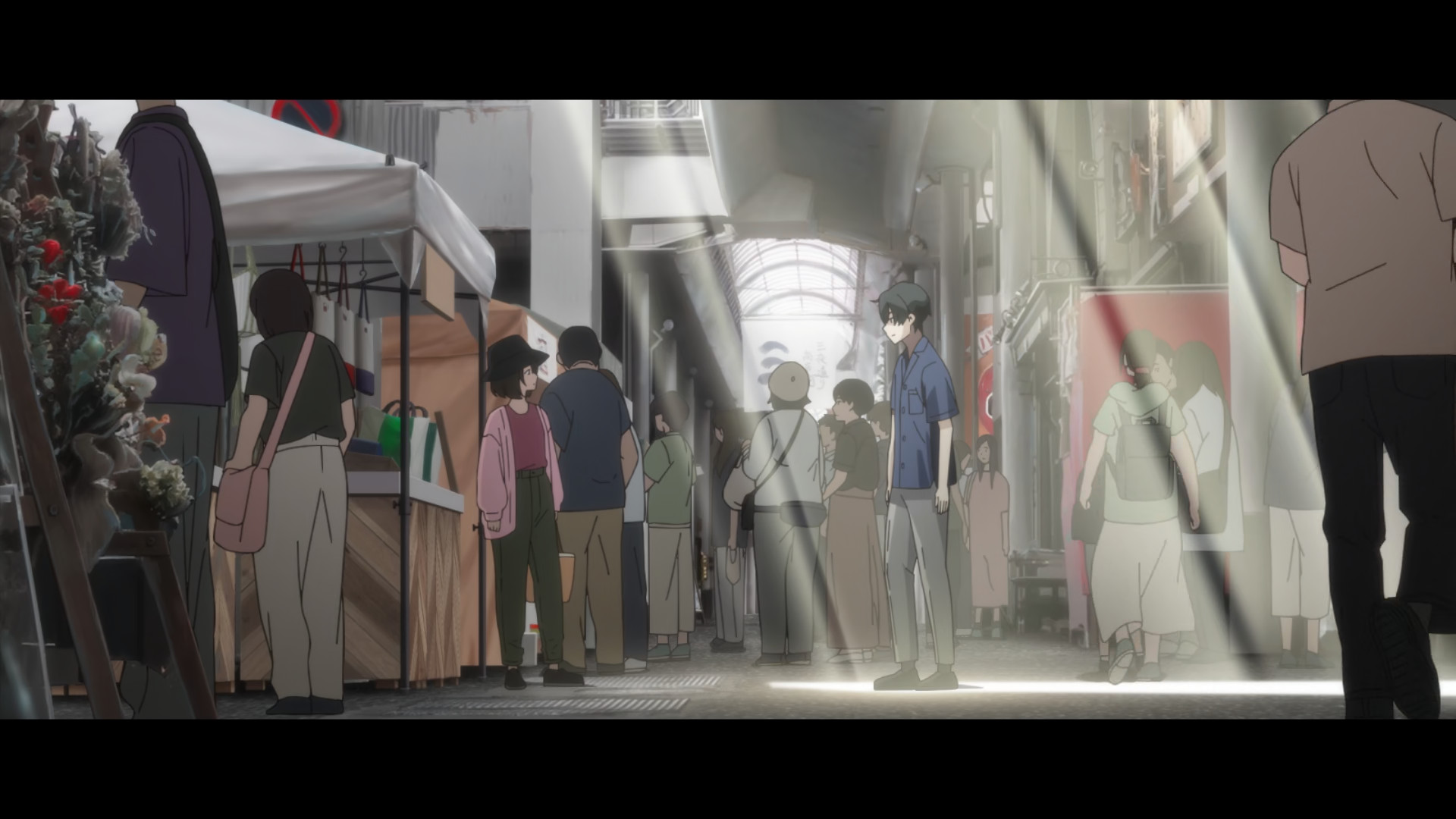 Even Yuki’s kidnapping is alluded to in the 2nd episode, long before that arc begins. Jogoro oddly notes that Yuki seems to be in disguise when she is shopping before the two of them go over to Kengo’s house. Yuki disguising herself and later wearing clothes to help her enemies notice her is a key point only revealed at the end of the first season.