Review: Shoushimin: How to Become Ordinary
In Short:
Shoushimin: How to Become Ordinary is a 22 episode anime made by studio Lapin Track in 2024 & 2025 based on an existing series of novels and manga. It follows Jogoro Kobato and Yuki Osanai, two clever yet quietly quirky high school students who have a knack for solving minor mysteries. In addition to its fascinating main characters, the show features great art, inventive direction, and slow, subtle storytelling that rewards you for paying close attention to details.
This is a show that is slower paced than most anime. Sometimes, an odd glance or even a barely mentioned omission can be key to an entire plot line. Some will really appreciate what the show does, but others may find it too slow for their liking.
Suggested Watch Minimum: 3 episodes. The second episode is possibly the best example of the show’s subtle, slower-paced mini-mysteries, while the third episode is where the first arc really kicks in. Both need to be watched to have a good idea what you are getting into.
Full Review:
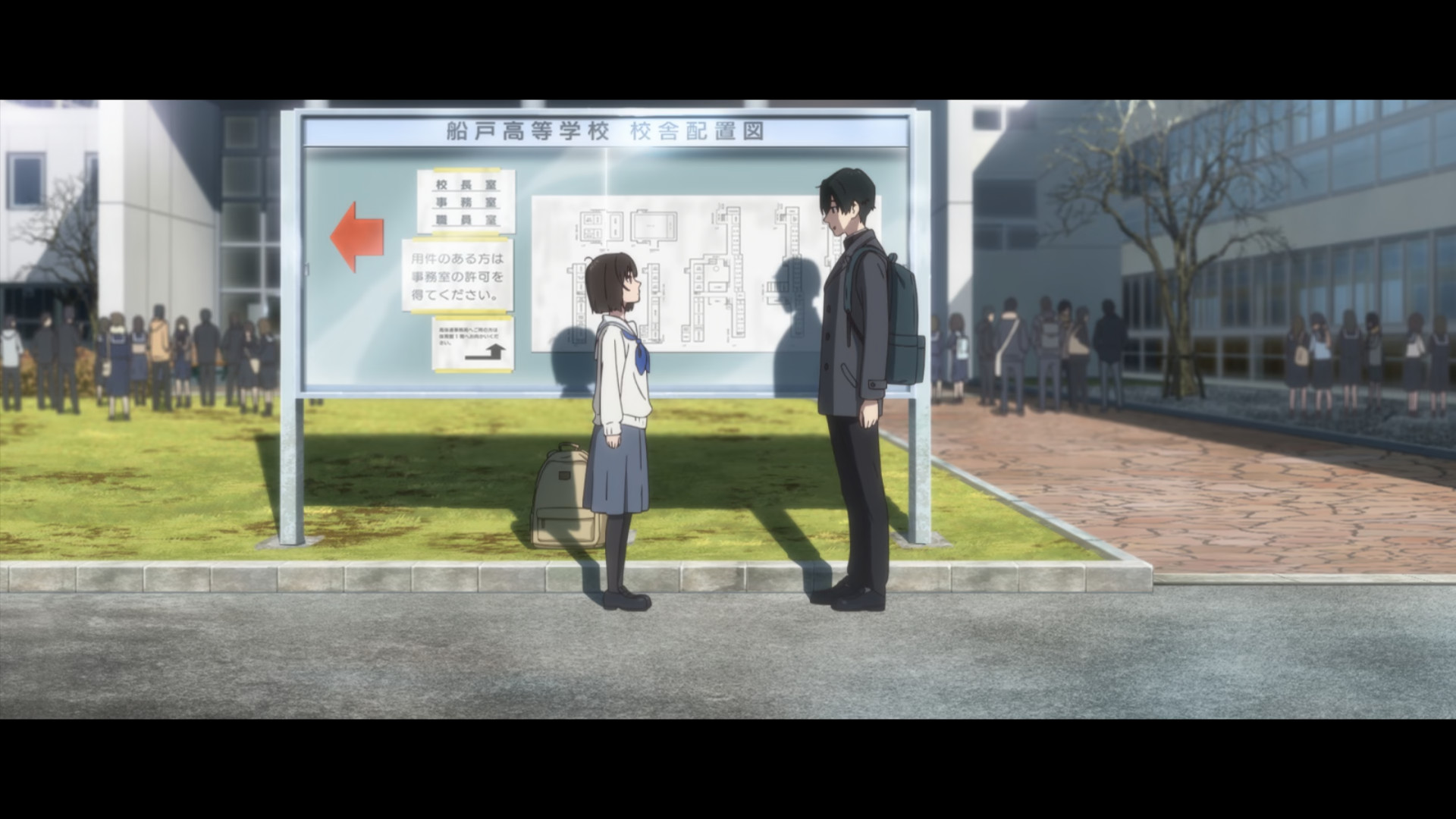 We first meet Jogoro Kobato on a sunny afternoon in the courtyard of the high school he recently applied to. The student number on the entrance exam printout he holds in his hand matches one of the many numbers posted on the display board he and several other potential students are standing in front of. He made it in, and can’t help the smug, satisfied smile plastered on his face as a result.
A minute later, Jogoro receives a text message and briefly searches around until he finds Yuki Osanai. The two have clearly met before, and, with a knowing look, the small, shy girl is able to instantly read Jogoro’s smug expression and softly replies: “Me, too.” They both made it in.
Yuki asks Jogoro if he’d like to go get some sweets to celebrate, but then suddenly tucks in close to him to hide as she spots another friend, a girl this time, leaning against a wall away from the courtyard. This girl is clearly not celebrating, and Jogoro begins to speculate that she must not have been accepted. But then he stops and apologizes to Yuki by saying: “ I’m failing to be an ordinary person, huh?”
This short interaction in the first couple of minutes of the show tells you almost everything you need to know about these two characters, and it begins the set up of the show’s biggest and best mystery. Jogoro is smart and a little smug. Yuki is insightful, shy, and loves to eat sweet thing. And, for some reason, the two of them really do wish to become ordinary. But that implies that they are somehow not ordinary now, something that turns out to be true in ways that are quieter and more subtle than you might expect.
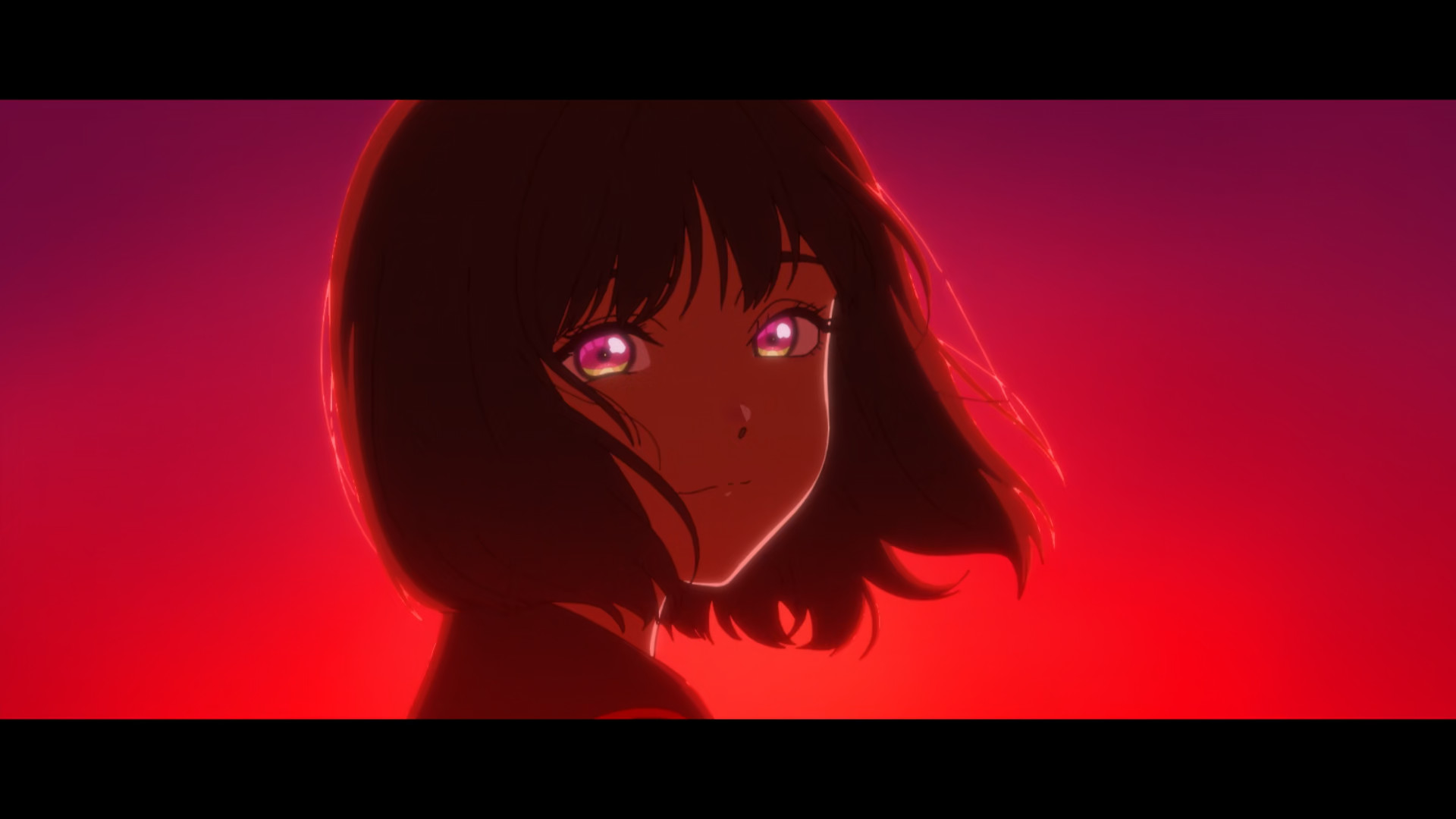 Over the next few of episodes we learn that these two each have aspects of their pasts they wish to distance themselves from now that they’ve entered high school. For Jogoro, it’s his instinctive habit of wanting to solve any sort of mystery he sees. For Yuki, it’s something a bit more frightening, especially coming from such a small girl. But what these two did in the past and what happened to make them both want to change are things that won’t all be fully teased out until the show’s final episodes. One thing that soon becomes clear, though, is that these two have made some sort of promise to support each other in their mutual goal to become ordinary.
One of my favorite aspects of the show is the way Jogoro and Yuki regard each other. They’re almost always together. They help each other when the other has a bad day. They enjoy subtly teasing each other and challenging each other’s problem solving abilities. But when asked early on if they are in a relationship they just stare blankly at each other, seemingly having never considered such a thing.
There’s also this mutual respect they have for each other’s odd way of thinking that is really sweet. For instance, when they first meet back in middle school, Jogoro declares he is looking to challenge himself and solve a case all on his own. When Yuki asks him how he’d feel if she told him he was being vain and self-congratulating he responds by saying he’d appreciate that she understood what he just said. And neither one of them is mocking the other or being offended. Time and time again they are able to communicate their thoughts and even their flaws directly without judging each other.
 The way they relate to others is interesting, as well. Jogoro, for instance, rarely gets mad or excited even when he should. Instead, he maintains that same sort of intellectual disconnect even when someone does try to insult him. His deadpan logical way of processing the world can even be infuriating to others, but that’s just the way he is. And Yuki? She can be sweet and supportive, but woe to anyone who manages to upset her! She never once lashes out or raises her voice, but those on the receiving end of her quiet, manipulative anger end up wishing she would have. When she tells Jogoro she’ll have no mercy on someone at the start of the final act, you legitimately feel bad for that other person!
Throughout the show, these two soft-spoken, slightly odd students end up working together to solve mysteries big and small mostly in and around their high school. Some of the mysteries are insignificant and mundane. How do you make three really good mugs of hot cocoa in the fewest possible steps? Which member of the school’s newspaper club was lying about eating the lone prank cupcake filled with spicy mustard instead of normal sweet jelly? That sort of thing. But other mysteries Jogoro and Yuki get mixed up in involve serious matters like identity theft, kidnapping, arson, and even attempted murder. And all of these mysteries are set up so this pair of mildly clever high school students have a legitimate chance to solve them. The show has a groundedness that I really enjoyed.
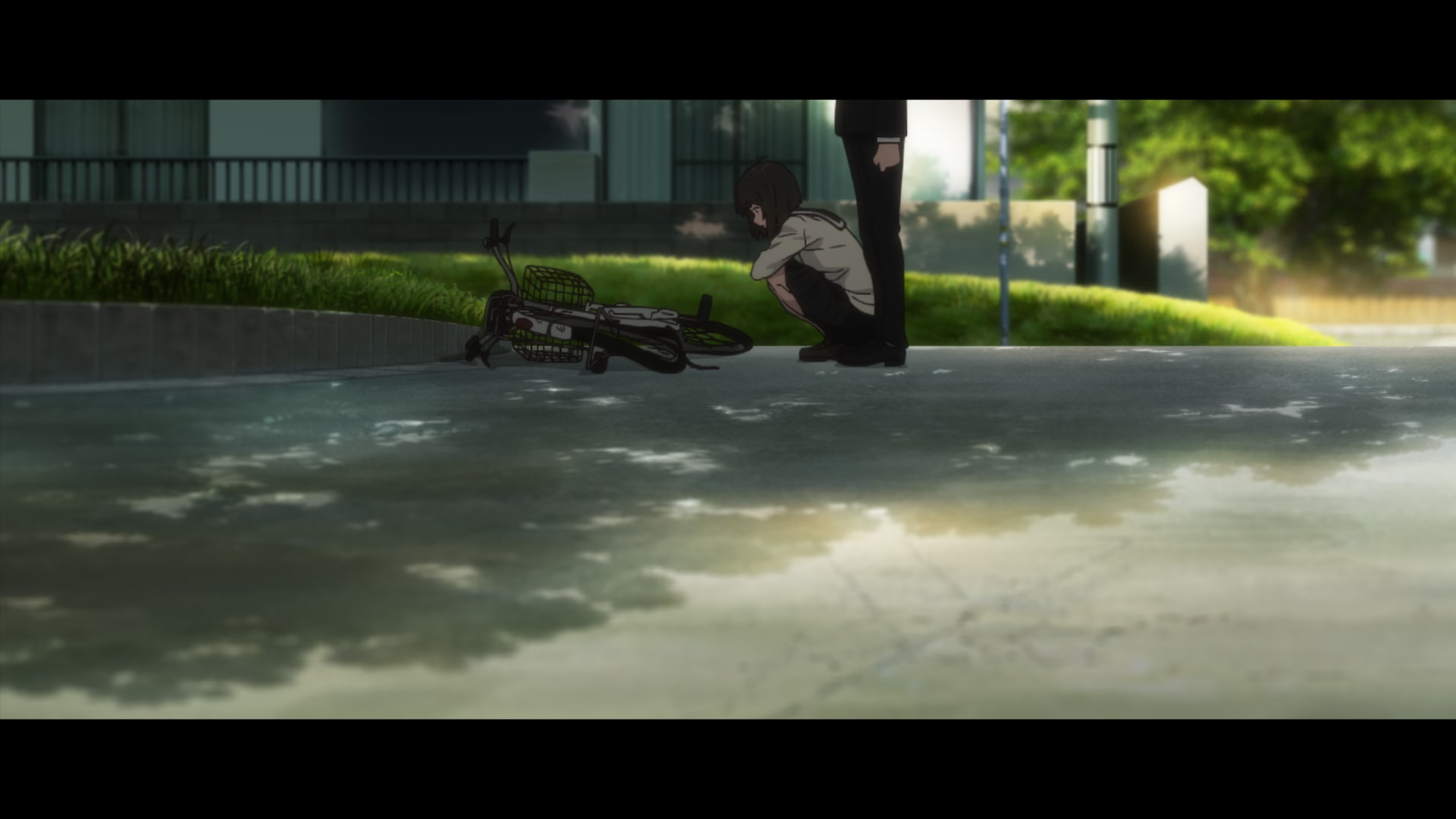 Another thing I really like about the show’s story is what it tells you and what it doesn’t. If a show holds back too much about a mystery, the solution will seem to come out of nowhere. If it lets you in on too much, you’ll solve the mystery long before the supposedly smart characters do which will make them seem stupid for missing the obvious. Somehow, Shoushimin: How to Become Ordinary managed to walk a fine line. It does often hold important clues back, but it always did so in a way that let me make similar leaps of logic to the ones Jogoro and Yuki were making as long as I was paying attention. Instead of being frustrated at the show for holding back too much or too little, I was always delighted at the solution to each mystery whether or not I managed to solve them beforehand.
Beyond the characters and story, I really enjoyed the show’s art style and its directing. The backgrounds and character designs are generally well done. I liked the show’s use of lighting here and there to enhance a scene or even just using subtle glows and light bounces to make the environments feel real. This isn’t a show with a ton of flashy animation, but every once in a while it shows off a little. Yuki’s love of sweets is sometimes shown in stunning detail. Just watching her fork cut a slice of cake is one of the standout moments of animation early on. One of my other favorite bits of animation was the pouring of warm, bubbling milk into a mug in the second episode. You could almost taste the hot cocoa they were mixing in that scene!
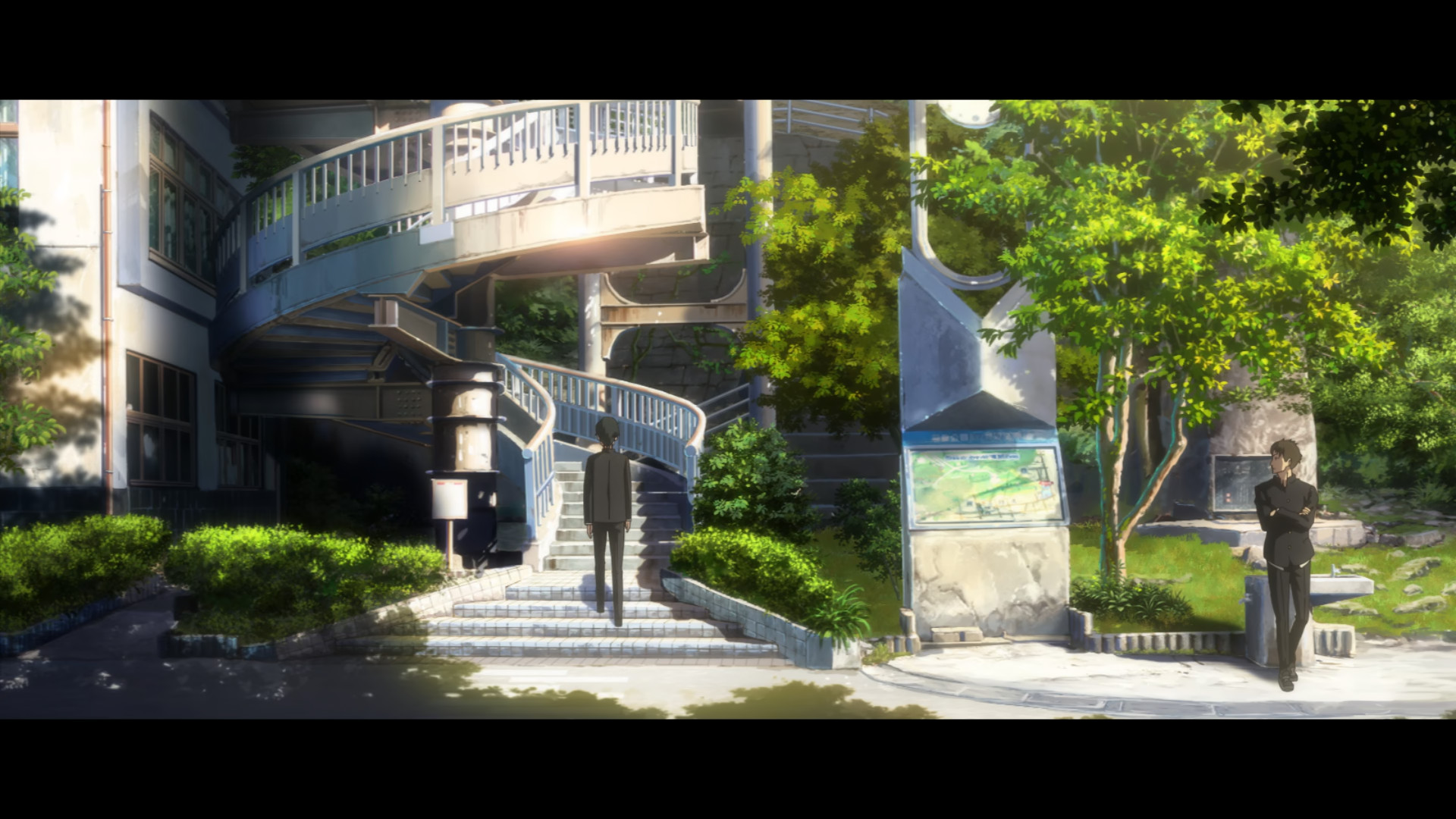 Finally, there’s the show’s directing. Again, it’s not particularly flashy, but I do think it was pretty special. For one, the show likes transporting our main characters to different environments as they ponder the solution to the puzzles before them. Sitting around inside working through the facts of a mystery is at one point shown as climbing an exterior concrete spiral staircase. When Jogoro and Yuki at one point come to a disagreement, we see them portrayed outdoors separated by a river. The places they imagine themselves in don’t always make direct sense, but the segments do a good job of conveying the emotions of the scenes they are in.
The show also likes to make use of cutaways and interesting camera angles. When something important happens, it might cut to someone’s brief reaction, or it will position the camera to catch a meaningful reflection or put it directly overhead to capture people’s movements while they are eating. Nothing here is so stunning that it set the Internet ablaze, but when all put together, I really came to appreciate just how often the show went above and beyond boring static shots even when the only thing in a scene was just two people talking.
All In All:
Shoushimin: How to Become Ordinary is an oddity to be sure. It has this quiet confidence to take things slow and revel in the subtle quirks of its main characters. It’s willing to spend entire episodes on singular insignificant mysteries but it will also drop hints and clues to upcoming cases episodes in advance before you even know to look for them. And I really enjoyed the way the show gives you all the clues you need to solve each mystery but holds enough back to make you really pay attention and work for the answers before it reveals everything at the end of each case.
I don’t want to spoil every mystery of the show, and certainly didn’t want to give too many things away in the main review, but I love the details the show hides and the clues it gives while leaving it up to up to solve its mysteries.
 Even as early as the first episode, the show is offering you a solid chance to solve the mystery while making you pay attention to the details and work for the answer. Multiple times over, the show presents the boy who stole the bag as suspiciously running all over the school. He runs across floors he wasn’t assigned. He does that big wave down on the sidewalk. And critically, the show sneaks in a few different shots of the entrance that Yuki is sitting at. There’s one instance where Jogoro looks out a window and Yuki is just barely in frame on her bench for under a second. Then, a couple minutes later, the culprit ends up in that same area. There’s no one shot that exactly links his position and Yuki’s, but there enough there that you can surmise he’s up to no good and that he has chosen to rest on the left of that entrance area and she’s on the right in full view of his shenanigans.
This kind of thing happens again and again throughout the series. In the Fireman case, Jogoro mentions he is working with one of the other newspaper members to solve the mystery, but his solution will take a couple of months. There’s also mention that this same newspaper member has been having to step up and do extra duties like spell checking and printing the issues. It’s up to you to put together that Jogoro is planning a “canary trap” by having his contact edit and print various versions of the newspaper with details meant to influence and out the arsonist.
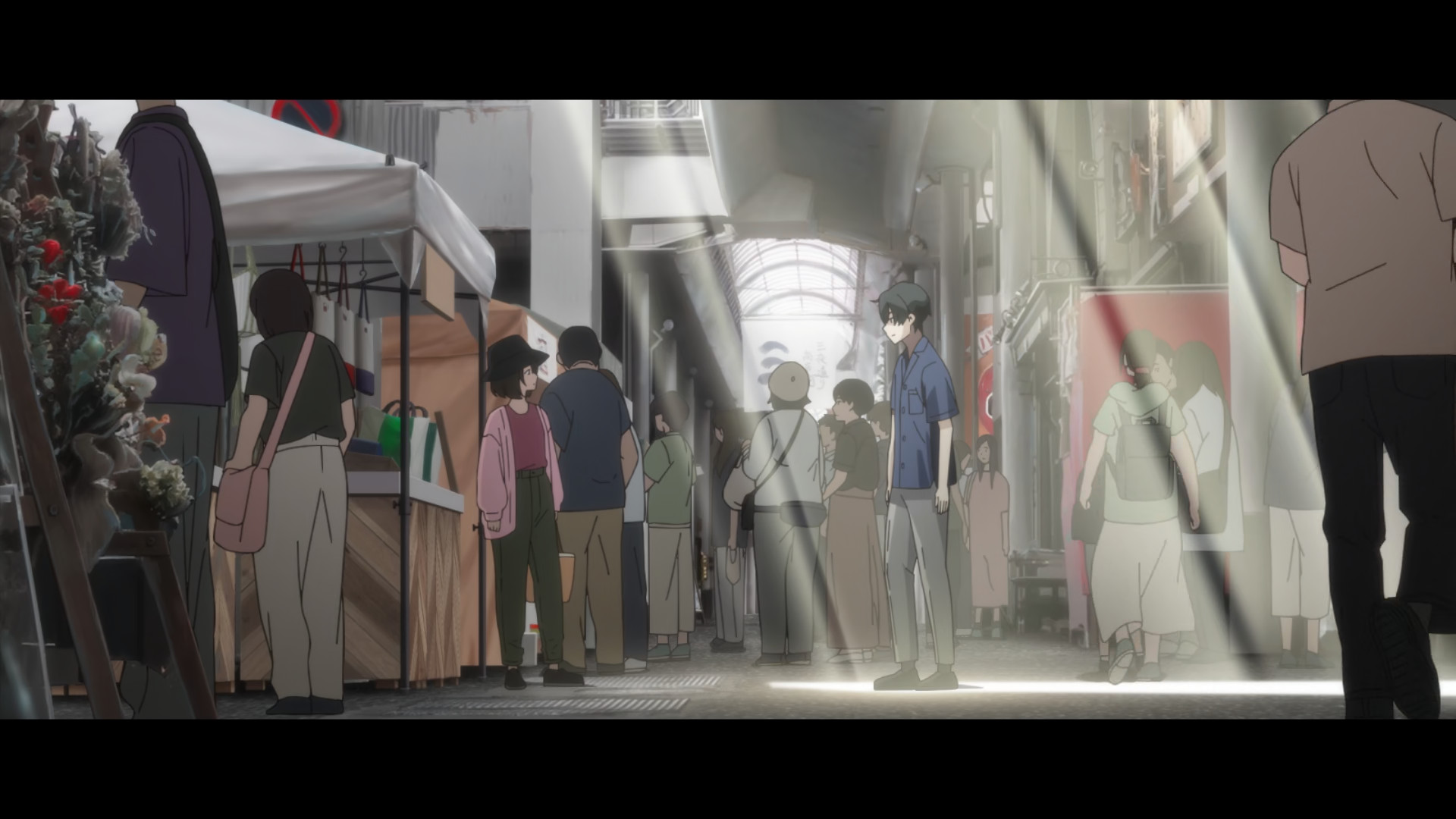 Even Yuki’s kidnapping is alluded to in the 2nd episode, long before that arc begins. Jogoro oddly notes that Yuki seems to be in disguise when she is shopping before the two of them go over to Kengo’s house. Yuki disguising herself and later wearing clothes to help her enemies notice her is a key point only revealed at the end of the first season.


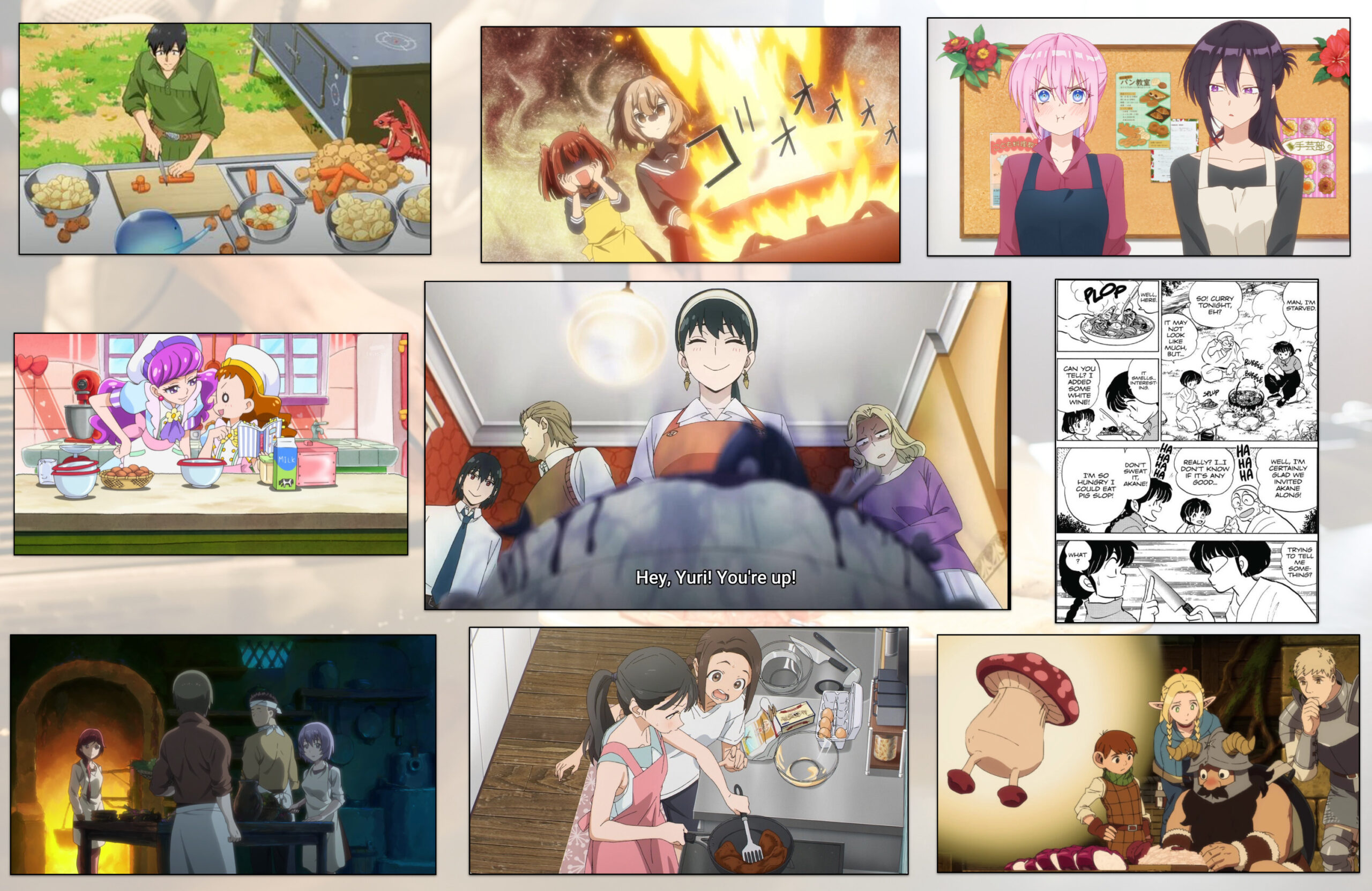
AniManga Picture Challenge 67: Cooking
This week on the #AniMangaPictureChallenge we attempted to cook... sometimes with more or less success given the chef. :p
@BongoMcnulty - Spy x Family
@anicasts - Shikimori's Not Just A Cutie
@Ragashingo - Grimgar of Fantasy and Ash
@closetweeb - Kirakira☆PreCure a la Mode
@sam4000 - Campfire Cooking in Another World with My Absurd Skill
@Norrsken - Delicious in Dungeon
@moleSG - This Monster Wants to Eat Me
@Tatsumeg - Akebi's Sailor Uniform
@CT - Ranma 1/2

AniManga Picture Challenge 66: This Week (Fall 2025)
This week the #AniMangaPictureChallenge looked at the #anime and #manga people were enjoying This Week.
@Ragashingo May I Ask for One Final Thing
@BongoMcnulty Angel Beats, Touring after the Apocalypse, Hands Off Sawaranaide Kotesashi-Kun
@anicasts Mr. Yano's Ordinary Days
@prex Pokemon Horizons
@Tatsumeg Touring After the Apocalypse, May I Ask for One Final Thing?, My Status as an Assassin Obviously Exceeds the Hero’s, Kakuriyo Bed & Breakfast for Spirits
@CT Akane-banashi
@moleSG A Mangaka's Weirdly Wonderful Workplace
@hendric Plus Sized Misadventures In Love
Thanks to everyone who submitted, it's always fun to make use the This Week topic to highlight a wider range of good shows and comics... and fill in a bunch of those tv boxes. :p

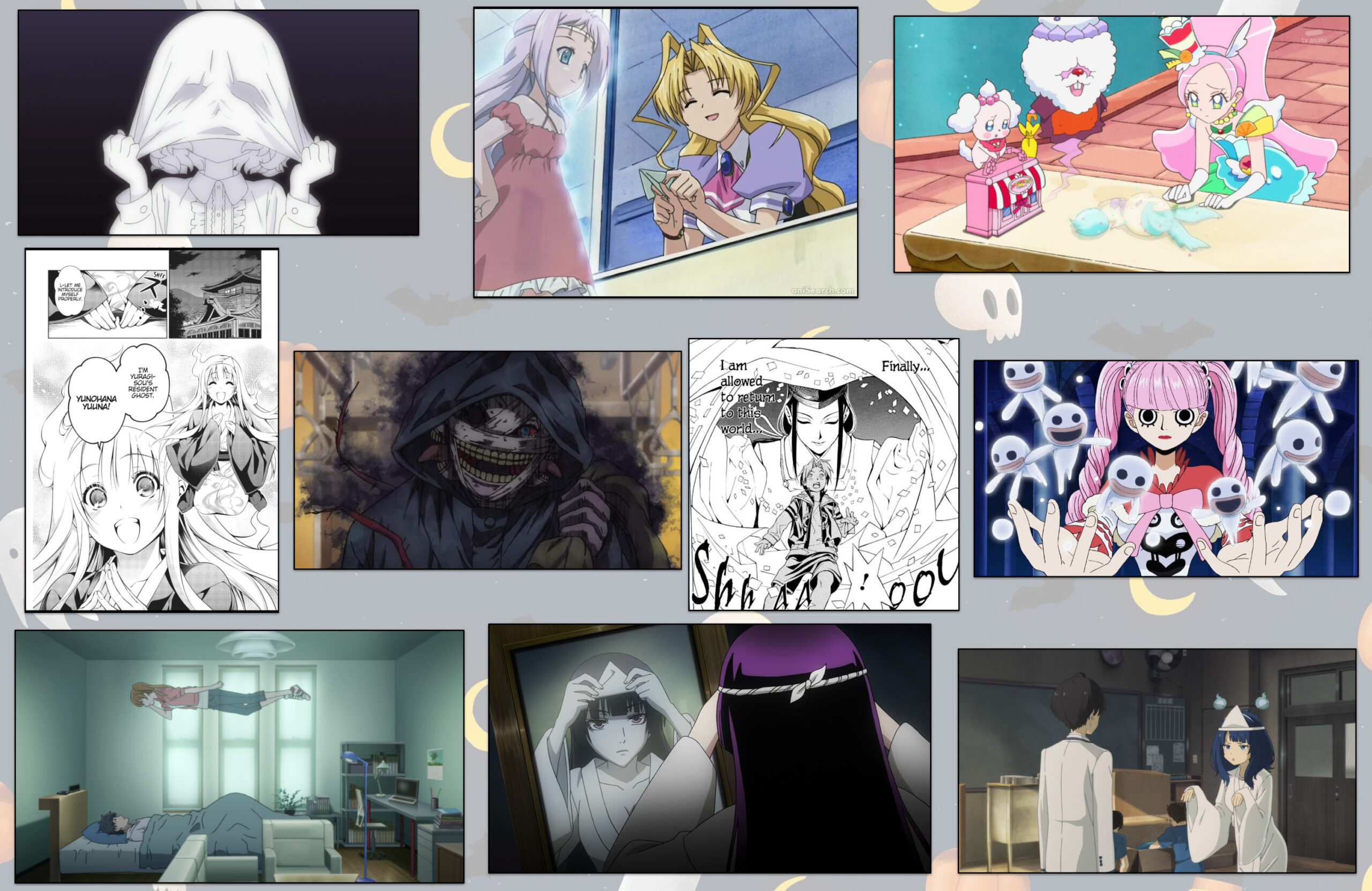
AniManga Picture Challenge 65: Ghosts
This week the #AniMangaPictureChallenge found a bunch of Ghosts in #anime and #manga. Or did they #AniMangaFoundIt Us?! 😈
@otakureview Maburaho
@BongoMcnulty Mieruko-chan
@CT In/Spectre
@Ragashingo Sagrada Reset
@closetweeb KiraKira☆Pretty Cure A La Mode
@hendric Too Many Losing Heroines
@anicasts Dusk Maiden of Amnesia
@sam4000 One Piece
@moleSG Hikaru No Go
@Tatsumeg Yuuna and the Haunted Hot Springs
Thanks for all the spooky!

Symphogear Episode 09: Protector's Song
Episode Summary:
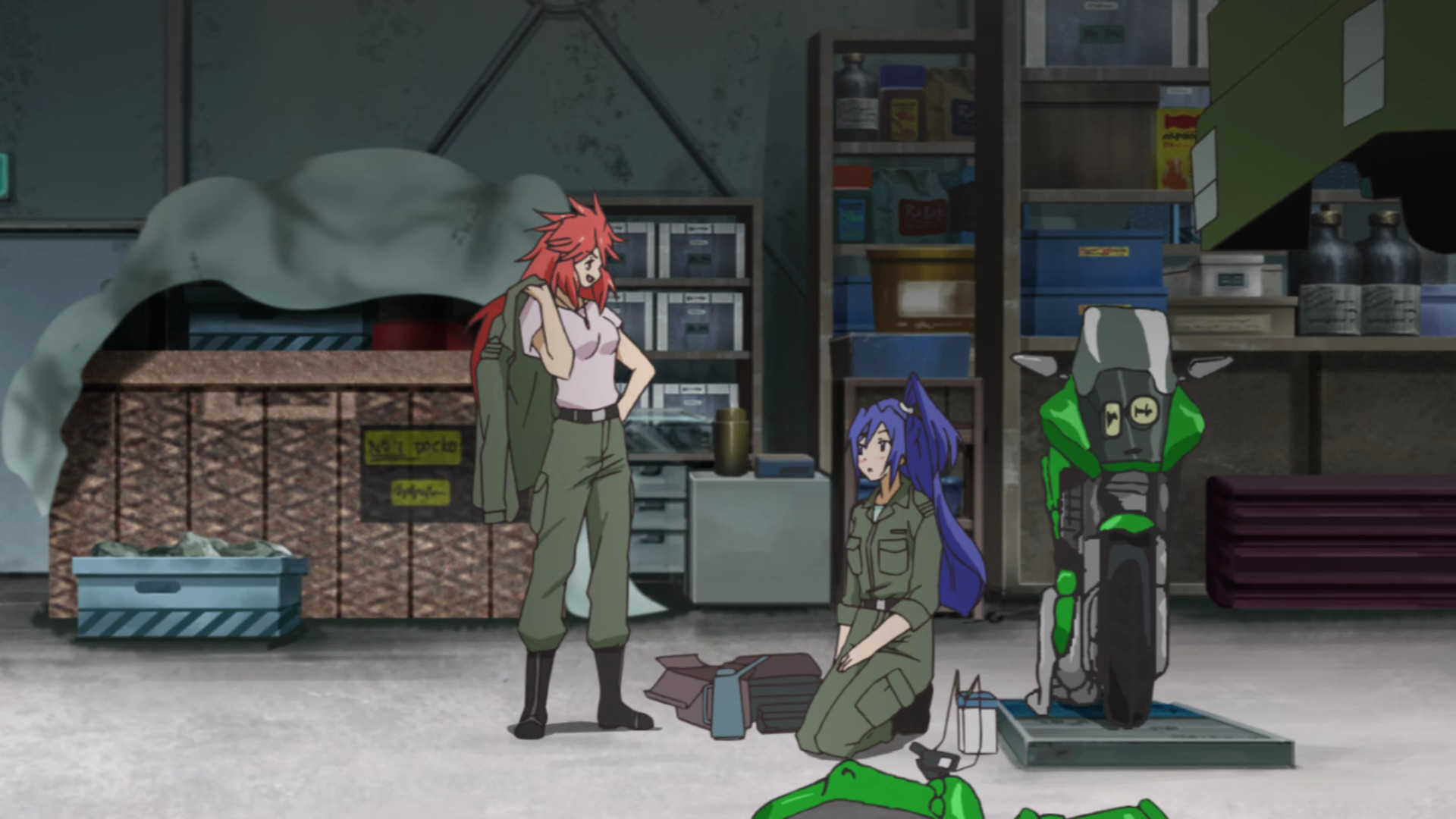 We start back in the past in a brief flashback where Tsubasa remembers Kanade encouraging her to sing more outside their work of fighting Noise. Tsubasa wakes up a short time later in the present after having one last scan to determine that she has finally recovered from her Superb Song.
Miku is being let into the secrets that Hibiki has had to live with the past few months. She meets Tsubasa and they have a laugh at how accident prone Hibiki is. Ryoko walks up and starts to regale the girls with a tale of a time she fell in love, only to oddly cut herself off when she being to link that past love to the reason she started researching the Symphogear relics. As the conversation with Ryoko ends, Hibiki suggests that she, Miku and Tsubasa go on a date out. Tsubasa reluctantly agrees.
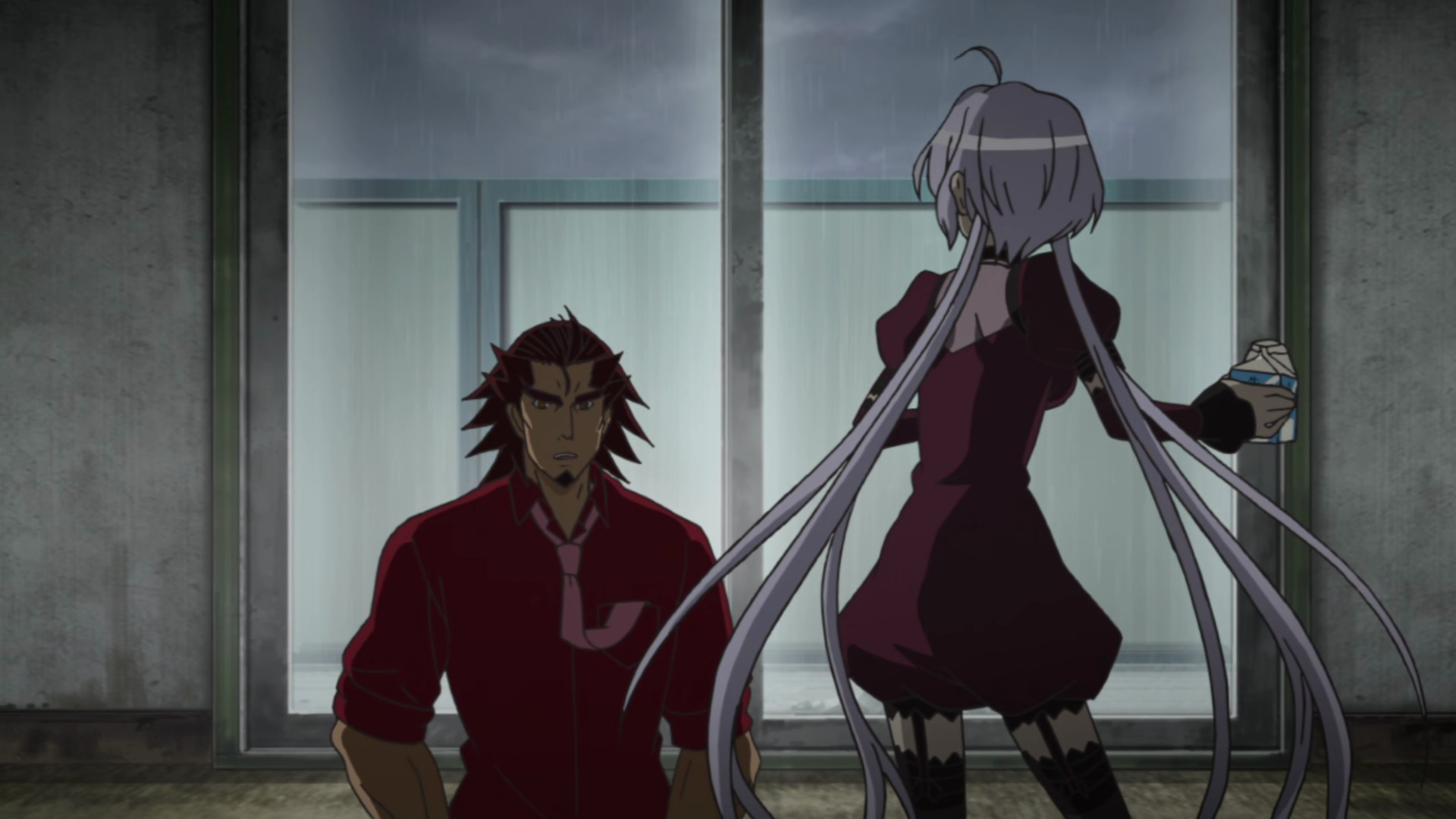 Meanwhile, Genjuro has taken a brief leave of absence saying he is returning one of his rented action movies… but he’s been gone longer than usual. It turns out he has tracked down Chris Yukine and is working to slowly gain her trust by just talking to her and bringing her much needed food. Chris is still angry at all the adults that failed her, but converses with Genjuro a bit before fleeing the uncomfortable conversation. Still, it’s a start.
Tsubasa’s day trip starts out on the wrong foot as Hibiki and Miku are late because Hibiki overslept. But things soon get better as Tsubasa is given the chance to do regular everyday activities for the first time in as long as she can remember. The three go shopping, watch a sappy romance movie, buy clothes, and sing karaoke. Tsubasa surprises the other two when she begins to sing. Instead of choosing one of her j-pop songs, she instead goes with something that sounds like a Samurai-era song of passion and regret.
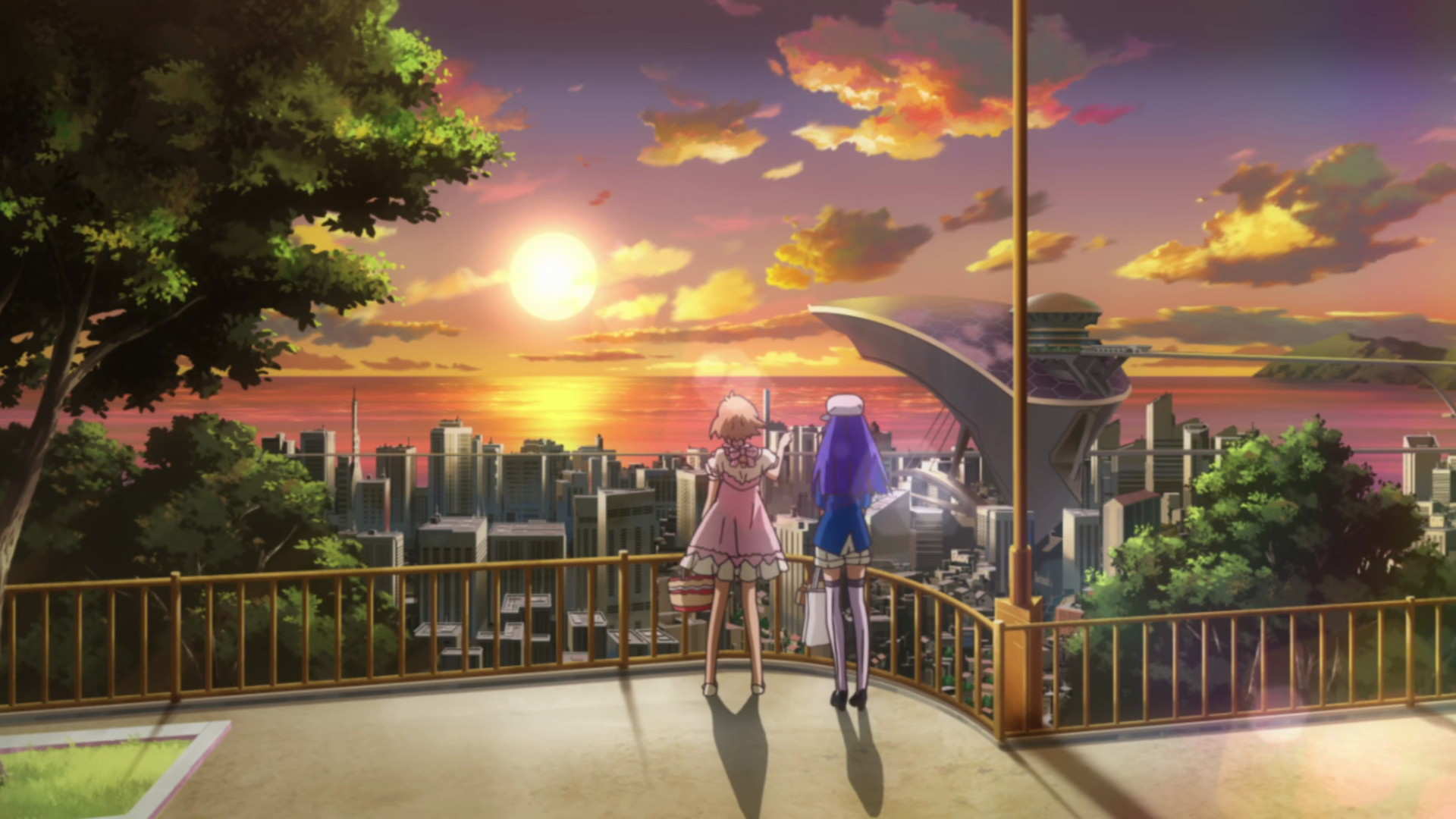 As their trip comes to an end, Tsubasa realizes that this is the world that Kanade saw. One of just normal fun outings with friends beyond the pains and struggles of war against the Noise. Hibiki agrees, but reminds Tsubasa that the peaceful city vista before them would not even exist if Tsubasa hadn’t fought to hard for it. Tsubasa make the decision to return to her singing career and gives Hibiki and Miku tickets to her next event.
A few days later, Tsubasa is back on stage, back at the theater where she lost Kanade. Hibiki is, of course, running late, but then gets a call that Noise have appeared elsewhere in the city. At Hibiki’s request, Genjuro does not call in Tsubasa, opting to let her continue her performance while Hibiki handles the noise alone. Except, it turns out Hibiki is not alone. Chris is there, too, fighting a giant fortress Noise for her own reasons.
 What follows is a gorgeous song by Tsubasa intercut with Hibiki and Chris’ battle against the Noise. Though the two former enemies barely interact, Hibiki and Chris do end up supporting each other and eliminate the Noise all without getting in each other’s way.
In the end, Tsubasa admits to her audience how much singing means to her and asks them if they’ll allow her to expand abroad and bring her songs to more and more people. She is delighted when they give her a cheer of support. Tsubasa is finally back where she is meant to be… Meanwhile, Chris is alone back in an alley confused as to why she helped Hibiki fight the Noise.
Episode Impressions:
This is a good episode. The show is still moving things into place for a big finale, but that doesn’t mean important things aren’t happening. Tsubasa seems to have finally come to terms with her role in fighting the Noise. She isn’t abandoning being a warrior, but she has accepted that her songs can be used for other, better purposes than fighting.
 At the same time, Chris has gone from an outright enemy to a reluctant ally. She’s still struggling with the twisted worldview Finé forced on her, but she is no longer out there hurting people or doing Finé’s dirty work. Chris is actually out alone risking her life to protect others!
With Tsubasa healed up and her relationship with Hibiki turned around, I think all we have to do is bring Chris into the mix and we’ll have a powerful trio to fight Finé and the Noise.
Specific Scenes I Loved:
 Genjuro demonstrating to Chris that the food he brought her is not poisoned by eating and drinking a bit of it before he hands it over to her. Chris has spent the last several years of her life being abused by the adults around her. Genjuro is taking it one small step at a time to gain Chris’ trust.
Tsubasa’s concert. Her song is so obviously about herself. And the way it is used as the combat music is great.
Songs In This Episode:
Koi no Okehazama – This is such a Japanese love song. One that is seemingly being sung by a maiden warrior in love but also alight with jealousy and emotion. The full song doesn’t seem to have a ton of relevance to the episode or show. It’s just something that might have been written by a young warrior similar to Tsubasa hundreds of years ago.
FLIGHT FEATHERS – Wow. This is a song from Tsubasa to and about Kanade. In it, Tsubasa sings about being drawn to Kanade. About losing her but not wanting her memory to disappear. And about remembering the lessons Kanade taught her. There’s also strong implications that Tsubasa has accepted everything that’s happened and plans to continue confidently down her road.
Themes In This Episode:
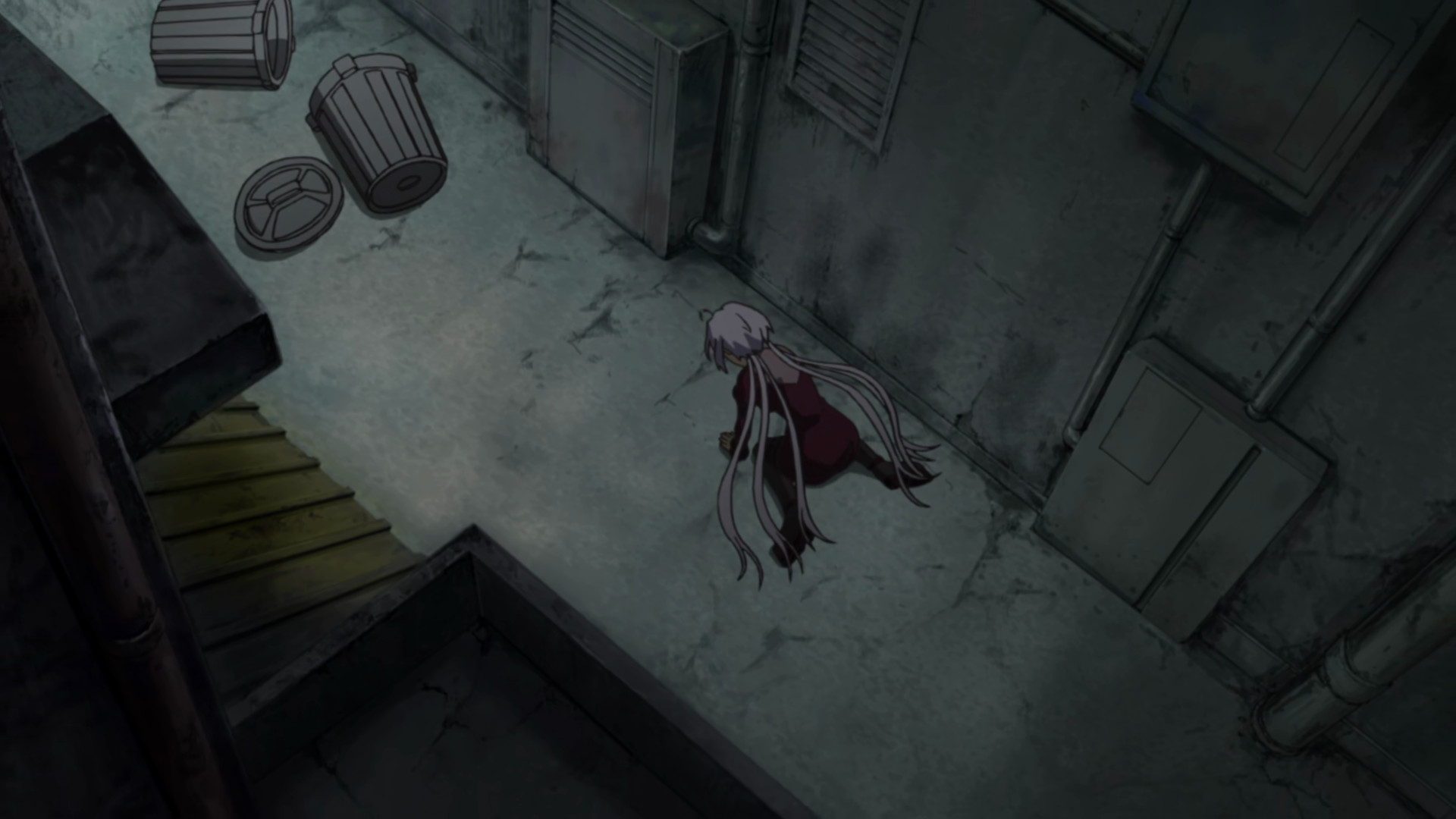 While it’s not really spoken, we see Chris struggling at the end with the reality of her wish to bring peace to the world through strength and violence. Mostly, we see that Chris is distraught and confused because Finé taught her she needed to have no friend and get no help from others… and yet during her big battle with the Noise not only did she fight alongside Hibiki who believes fighting is a last resort, Chris actually helped Hibiki out in a couple of instances and got help in return. Chris is dealing with a bad worldview that has been shattered by Hibiki’s good actions. And she hasn’t quite made it through those struggles yet.
There’s a lot in this episode about Tsubasa finally finding herself in the world that Kanade found. The world beyond the fighting. Kanade, as we know, was a very messed up kid who had watched her family die to the Noise. But, over time, she realized that helping people was more important than her personal revenge. It’s probably why she loved her concerts with Tsubasa so much. It was a chance to help without having to fight.
Tsubasa mostly just seemed shy and overwhelmed before Kanade died. Afterwards, she was angry and mournful. She dedicated herself to the combat side of helping people and neglected everything else. But now, with Hibiki showing the way, Tsubasa has found her way to where Kanade was before she died. Tsubasa now understands that the war against the Noise is just what is necessary to create and preserve that world of shopping and singing and goofing off that Hibiki has been trying to show her.
There’s one last theme that’s interesting in this episode. Tsubasa, then Ryoko, and Finally Chris all wonder why something about them has changed.
For Tsubasa, it’s her being polite and welcoming and even making a joke where before she was emotionless and no-nonsense when down in their base. How Ryoko changed is not completely clear. But somehow she changed from a girl in love to one that studies relics without a loved one in her life. To the point that she decided not to reveal her entire love story to the others. For Chris, it’s the aforementioned helping others combat the Noise. A complete reversal of her earlier role where she was the one who controlled where the Noise attacked.
Tsubasa and Chris’ change in character are both important. I think maybe Ryoko’s is, too, we just don’t know her whole story yet.
Things You Should Pay Attention To:
Ryoko has some event in her past that started her down the past to researching relics. And it has something to do with someone she loved deeply. It could be nothing but a tragic backstory, or even a romantic one, but given the various warning signs around Ryoko, it could also be something sinister that happened…
Chris is about one step away from actively working with Hibiki and Tsubasa. She is still stubborn and on her own for the time being, but it seems like that can’t last much longer…
Moment By Moment Notes:
0:04 – Tsubasa is working on her bike and humming Gyakkou no Flugel
1:00 – Tsubasa is finally all healed from her injuries
2:50 – Miku is taking on some roles at 2nd Division. She and Tsubasa joke about how hopeless Hibiki is.
3:57 – Genjuro is out of the office. Looks like he left a message that he’d gone out to… urgently return an overdue video rental.
4:35 – Ryoko walks up and starts to tell her epic story of love long ago but cuts herself off when she realizes what she is doing.
5:40 – Ryoko is hiding something about why she originally started researching the relics? It has something to do with her love story?
5:52 – Genjuro has arrived at Tatsuya, the place listed on his away message, but he isn’t returning a movie.
6:25 – Meanwhile, Hibiki suggest an all girls outing with Miku and Tsubasa.
6:48 – Genjuro is instead helping Chris out with food while explaining what happened to her from his perspective.
8:52 – It’s an adult’s job to finish what he starts.
9:48 – Chris is the third girl to wonder what she is doing. First Tsubasa, then Ryoko, and now Chris.
9:57 – Tsubasa is waiting for Hibiki and Miku for their planned “date”. Turns out Hibiki was late because she overslept.
10:42 – They go shopping, watch a romance movie, eat ice cream, try on clothes, and Hibiki nearly destroys a claw machine trying to win a prize.
11:43 – They finally end up at Karaoke Town here Tsubasa, of all people, takes the lead in singing a sad classic Japanese love song. Hibiki and Miku love it.
12:43 – Finally with the day winding down, Tsubasa admits she felt like she got to see a world she’d never known. She found a little of the world Kanade saw. Hibiki makes the point that Tsubasa knows this world and it’s because she fought for it that people like Hibiki get to live in it.
14:09 – Tsubasa is going to sing on stage again and give Hibiki and Miku tickets to her upcoming show.
14:53 – Hibiki and Tsubasa agree to overcome their painful pasts together.
15:09 – A producer from the UK offers Tsubasa the chance to sing outside Japan but she is unsure.
16:09 – Noise begin to emerge but Hibiki convinces command to let her handle it while Tsubasa gets her time on stage.
16:52 – Hibiki rushes off to fight the noise while Tsubasa sings.
16:56 – We find that Chris is along attacking the Noise in the area. She and Hibiki team up and end up supporting each other even though their relationship isn’t exactly great just yet.
17:57 – “The symphony here begins a legend” – could apply to this partnership between Hibiki, Chris, and Tsubasa…
20:54 – Tsubasa thanks the audience then relates how much fun she had singing for all of them. She then asks them if they will allow her to sing in other countries to spread her songs and help people. She seems unsure if her audience will let her go, but Kanade is sure… and sure enough, the audience cheers Tsubasa on.
21:49 – Tsubasa has again discovered her dream, but Chris is still out there struggling with hers. She can’t understand why Hibiki, her enemy, helped her. Or why she helped Hibiki.
AniManga Picture Challenge 64: Adulting
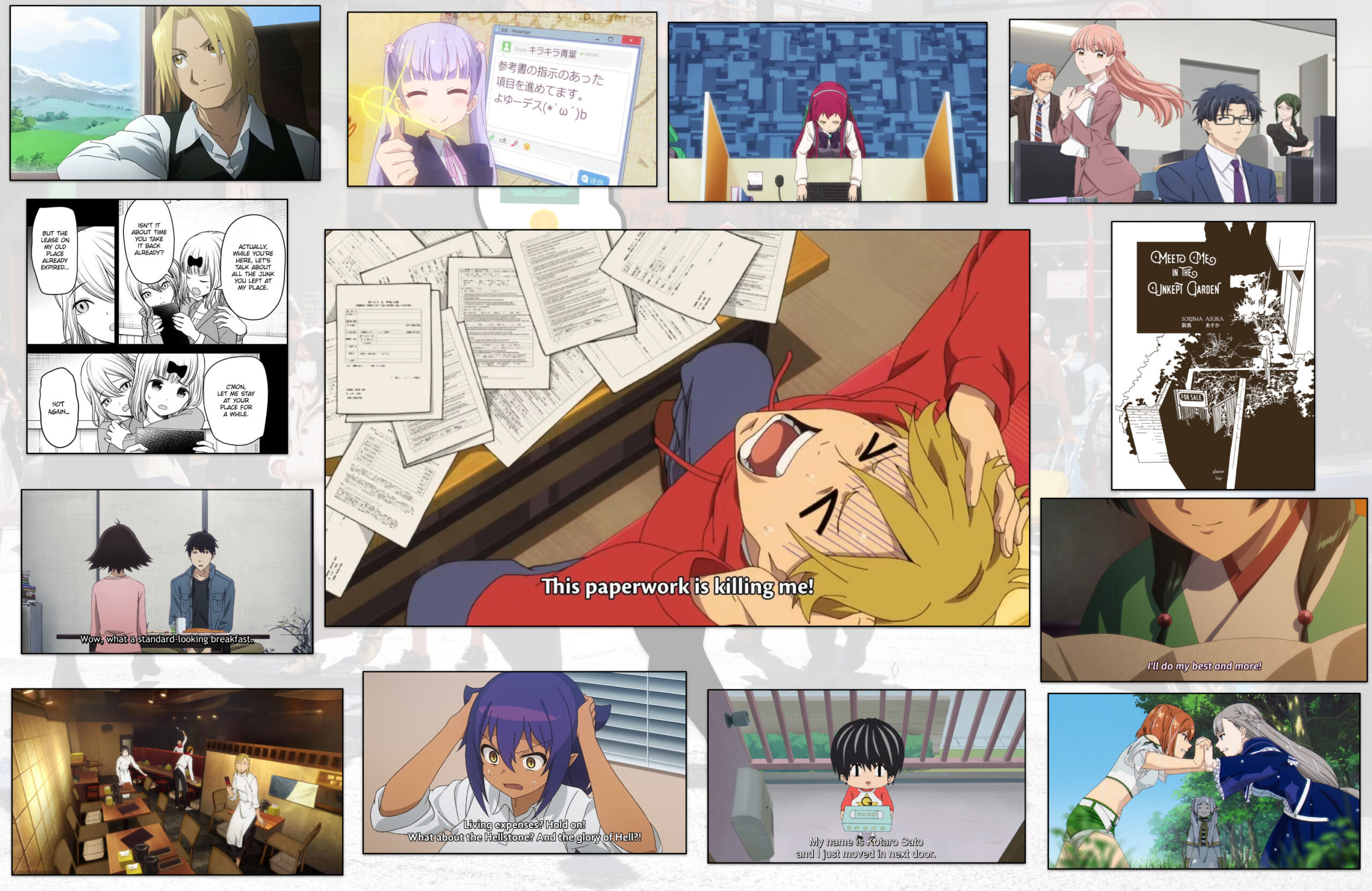
This week, the #AniMangaPictureChallenge #AniMangaFoundIt a bunch of characters doing their best impression of adults in #anime and #manga.
@sam4000 Fullmetal Alchemist Brotherhood
@Ragashingo Wave, Listen to Me!
@BongoMcnulty Buddy Daddies
@fujiwara Kaguya-sama: Love Is War
@literalgrill Meet Me in the Unkempt Garden
@otakureview The Devil Is a Part-Timer!
@closetweeb Frieren: Beyond Journey's End
@CT The Apothecary Diaries
@heinragas Wotakoi: Love Is Hard for Otaku
@anicasts Sing Yesterday For Me
@Tatsumeg The Great Jahy Will Not Be Defeated
@moleSG Kotaro Lives Alone
@sakasama New Game!
Thanks for all the #AniMangaFoundIt submissions, everyone! Lots of great examples this week spanning a nice range of situations across #anime and #manga!
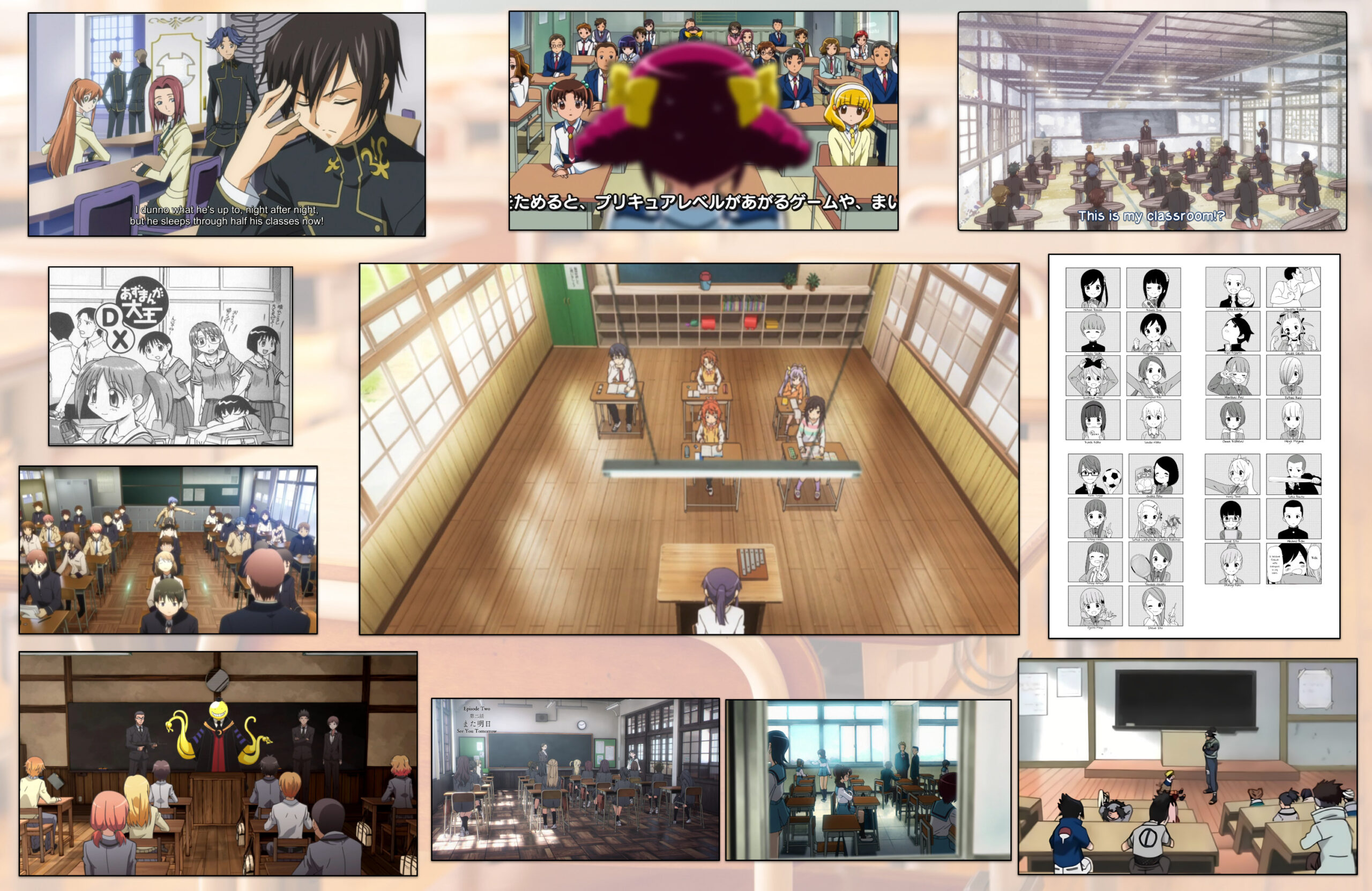
AniManga Picture Challenge 63: Homeroom
This week, the #AniMangaPictureChallenge #AniMangaFoundIt everyone attending their Homeroom.
@otakureview - Assassination Classroom
@BongoMcnulty - Hitoribocchi no Marumaru
@Ragashingo - Akebi's Sailor Uniform
@sam4000 - Code Geass, Angel Beats, Naruto
@heinragas - Non Non Biyori
@Tatsumeg - Baka and Test
@closetweeb - Smile PreCure!
@anicasts - The Melancholy of Haruhi Suzumiya
@cthellis - Azumanga Daioh
Thanks to everyone who made attendance.
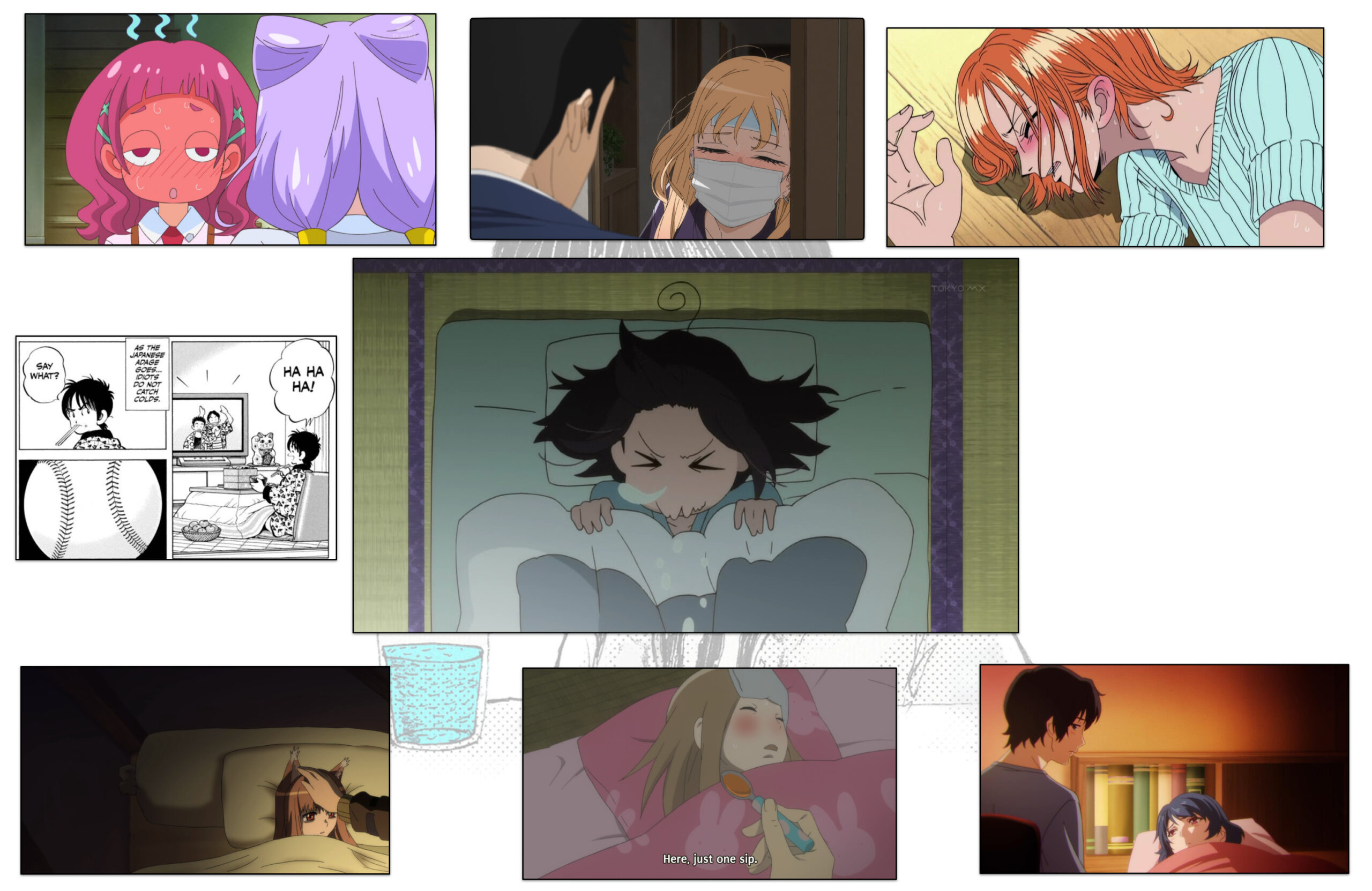
AniManga Picture Challenge 62: Colds & Sickness
This week, @BongoMcnulty was the Patient Zero who spread Cold & Sickness throughout the #anime and #manga we #AniMangaFoundIt for the #AniMangaPictureChallenge.
@BongoMcnulty - Domestic Girlfriend
@Ragashingo - Spice and Wolf
@sam4000 - One Piece
@anicasts - Yozakura Quartet: Hana no Uta
@closetweeb - Hugtto! PreCure
@Tatsumeg - My Dress-Up Darling
@moleSG - Usagi Drop
@cthellis - Cross Game
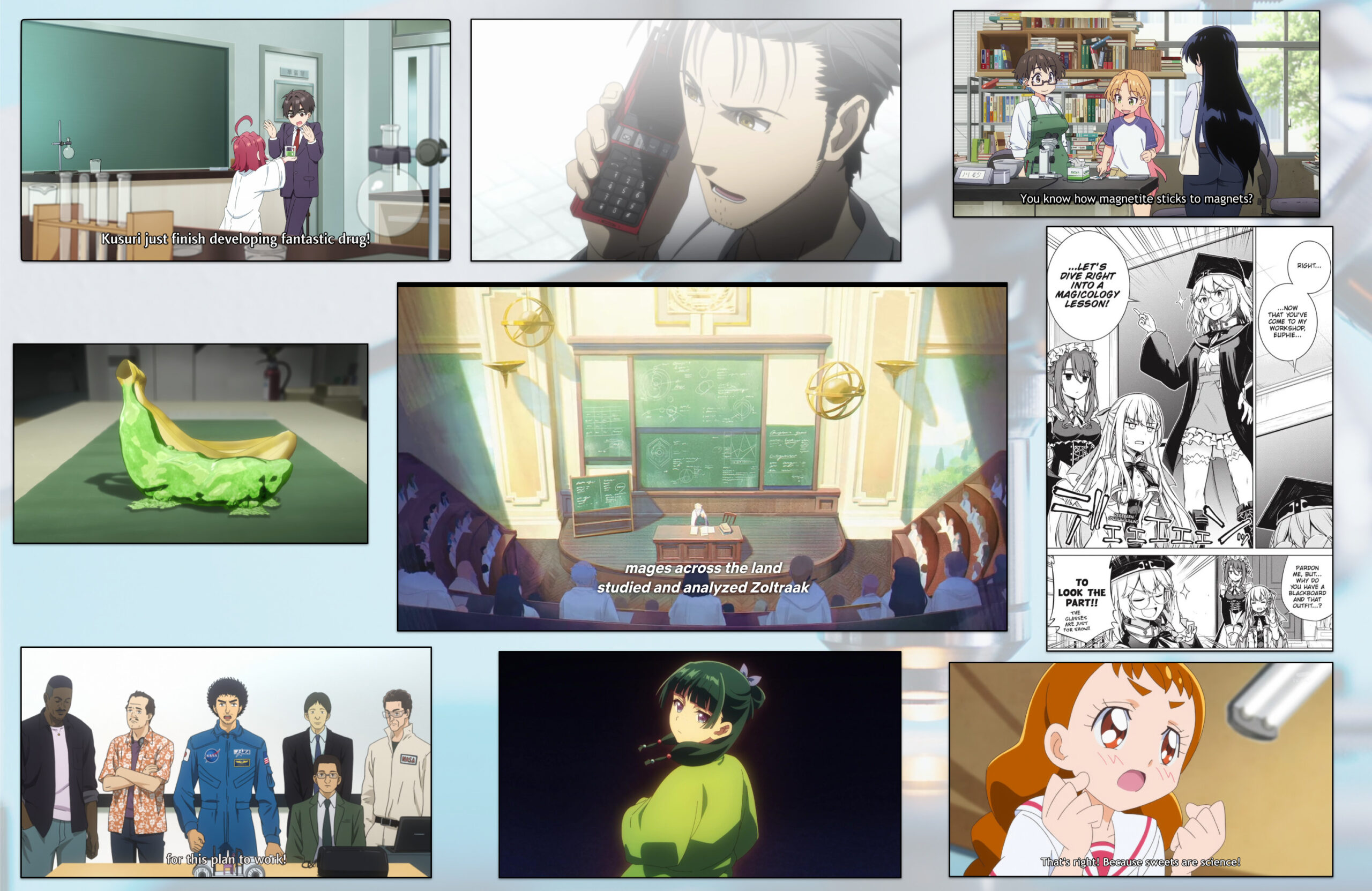
AniManga Picture Challenge 61: Science!
This week on the #AniMangaPictureChallenge we #AniMangaFoundIt Science!
@BongoMcnulty The Magical Revolution of the Reincarnated Princess and the Genius Young Lady
@closetweeb Kira Kira PreCure A La Mode
@hendric Frieren: Beyond Journey's End
@anicasts Steins;Gate
@Ragashingo Ruri Rocks (Introduction to Mineralogy)
@CT Space Camp (1986)
@Tatsumeg The 100 Girlfriends Who Really, Really, Really, Really, Really Love You
@otakureview The Apothecary Diaries
@sam4000 Steins;Gate

AniManga Picture Challenge 60: Lowest Lows
This week on the #AniMangaPictureChallenge we #AniMangaFoundIt characters from #anime and #manga at their Lowest Lows.
@Ragashingo - Planetes
@closetweeb - Smile PreCure!
@sam4000 - Death Note
@BongoMcnulty - Dandadan
@nyantadotwav - Rising of the Shield Hero
@anicasts - Your Lie in April
@moleSG - Run with the Wind
@Tatsumeg - Grimgar of Fantasy and Ash
@CT - Space Brothers
Thanks to everyone for the depressing times! :)